8 Jul 2026
Aligning Recovery Records with Surface Transitions for Tennis Accumulator Planning
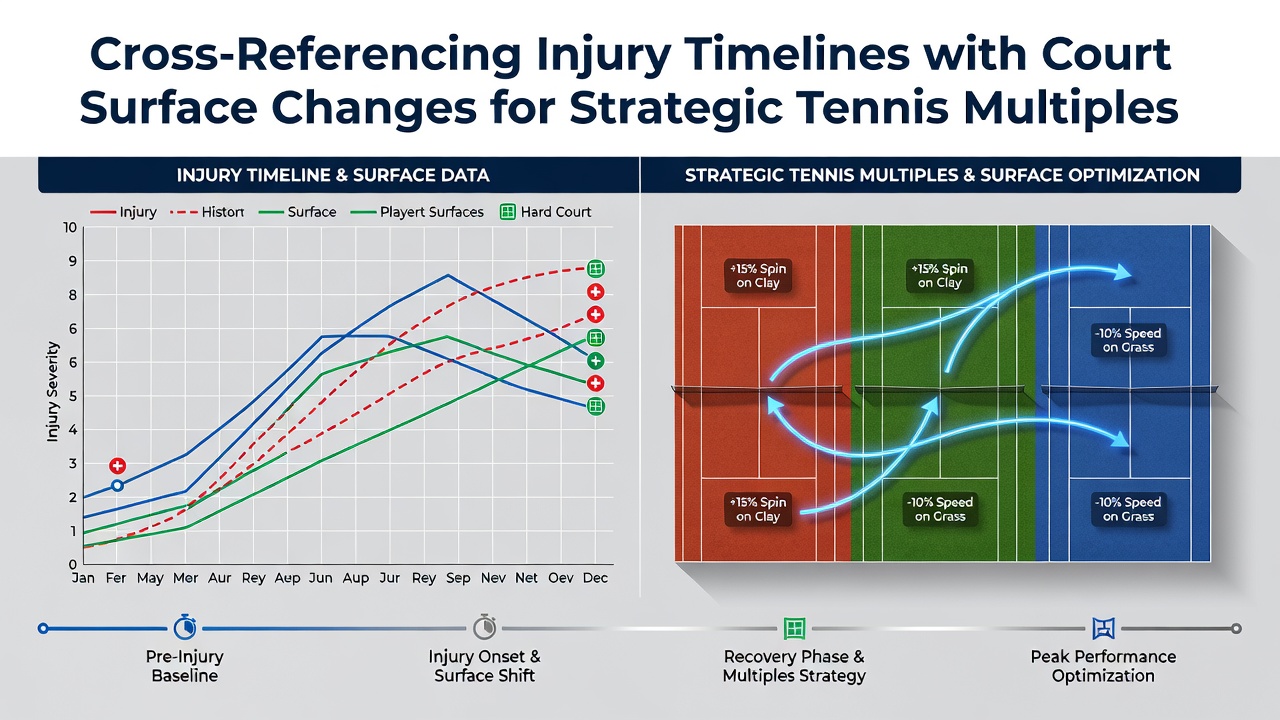
Players returning from injury often face different physical demands when tournaments shift from one surface to another, and data from the International Tennis Federation shows how these changes influence match outcomes across professional circuits. Clay courts slow the ball and increase sliding movements, whereas grass demands quicker stops and starts that place distinct loads on knees and ankles. Hard courts fall somewhere in between yet still produce repetitive impact patterns that can extend recovery windows for certain lower-body issues.
Medical reports compiled by the Association of Tennis Professionals indicate that ankle sprains, which represent a common ailment in the sport, typically require four to six weeks before full training resumes, yet performance metrics on faster surfaces may not normalize for an additional two to three weeks. Observers note that players who return during a surface transition period show measurable drops in serve velocity and lateral movement efficiency, statistics that become relevant when constructing multi-leg selections spanning consecutive events.
Understanding Surface-Specific Stressors
Each court type creates unique biomechanical stresses because clay allows longer rallies while absorbing some shock, grass produces low bounces that force players to bend more frequently, and hard courts deliver consistent but unforgiving rebound. Studies from sports medicine departments at universities in Australia have tracked how these differences affect hamstring and Achilles tendon recovery, with data revealing that players with recent soft-tissue injuries post lower win percentages in the first two tournaments after a surface change. Those patterns hold across both ATP and WTA tours when schedules move from European clay swings into North American hard-court blocks or the brief grass season.
July 2026 schedules place several lead-up events on grass immediately before Wimbledon, creating a compressed window where athletes must adapt quickly. Records maintained by the Women's Tennis Association demonstrate that competitors who competed on clay the prior month and then stepped onto grass without adequate adaptation time experienced a 12 to 15 percent increase in unforced errors during opening rounds, figures that directly affect reliability in accumulator construction when multiple matches are combined.
Mapping Injury Timelines to Tournament Calendars
Accurate cross-referencing begins with documented injury dates and expected return-to-play protocols. For example, wrist and elbow issues, which surface more frequently on hard courts due to vibration, generally follow eight-week rehabilitation arcs according to research published in the British Journal of Sports Medicine. When these timelines overlap with a shift to clay, the slower pace can reduce stress on the upper body yet introduce new demands on footwork that previously injured players may not have encountered during rehabilitation.
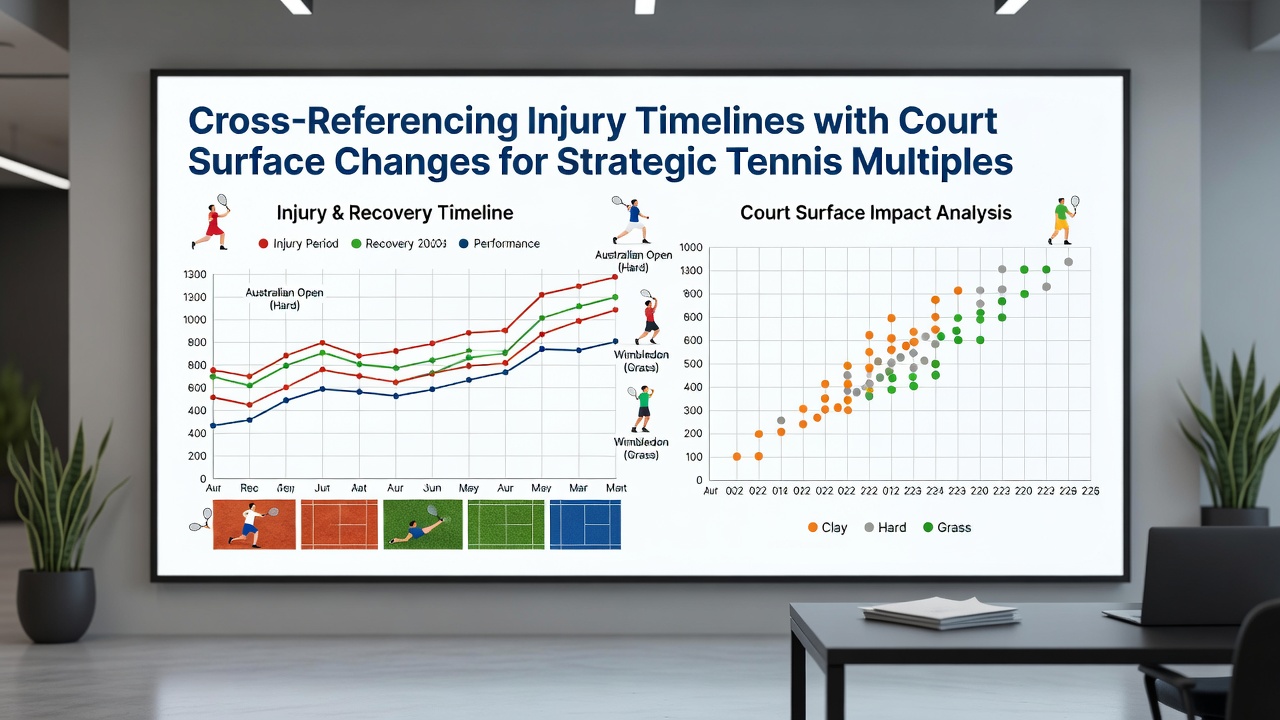
Coaches and analysts who review historical performance data find that players returning from back injuries often record higher success rates when their first post-recovery event occurs on clay rather than grass. The extended rally length allows more time between explosive movements, lowering re-injury risk while providing statistical consistency that supports multi-match planning. Conversely, those coming off knee procedures show steadier results on hard courts where footing remains predictable, data that emerges when comparing outcomes across the Australian swing and subsequent American hard-court series.
Integrating Data Sources for Accumulator Construction
Combining injury databases with surface-specific performance splits requires access to granular statistics that track both recovery milestones and match-level metrics. Publicly available records from the ITF and national federations in Europe and North America supply the raw numbers, while academic analyses from Canadian and German research groups offer models that adjust for surface transitions. One such study examined 180 player-seasons and identified that athletes who switched surfaces within four weeks of returning from moderate injuries won 8 percent fewer service games than their pre-injury baseline.
Practical application involves layering these adjusted probabilities across multiple matches rather than treating each selection independently. When a draw features several competitors navigating similar recovery windows and surface changes, the cumulative effect on set and match totals becomes more pronounced, patterns visible in results from the 2025 clay-to-grass transition period and expected to repeat under the 2026 calendar structure.
Conclusion
Systematic cross-referencing of injury timelines against upcoming surface changes supplies measurable inputs that refine accumulator planning across professional tennis tours. The approach draws on established medical timelines, surface-specific movement data, and historical performance splits to identify where recovery status aligns or conflicts with the demands of the next court type. As tournament schedules evolve through 2026, continued access to detailed recovery records and surface analytics supports more precise evaluation of multi-leg selections that span consecutive events.