10 Jun 2026
Allocating Daily Stakes Between Football Forecasts and Tennis Selections for Enduring Capital Stability

Observers note that bettors who spread their available capital across daily football forecasts and tennis selections often maintain steadier fund levels over extended periods, and this approach draws from basic principles of diversification that apply when markets fluctuate independently. Data from multiple sports betting analyses shows that concentrating all wagers on one sport increases exposure to correlated outcomes, whereas splitting stakes between football matches and tennis matches creates natural offsets because the events operate on different schedules and under distinct variables such as team form versus individual player conditions.
Core Principles Behind Stake Division
Those who have examined bankroll management records find that fixed-percentage allocation works best when daily football forecasts receive between forty and sixty percent of the session stake while tennis selections absorb the balance, and this ratio adjusts according to the number of available matches on any given day. Research from the University of Nevada Reno's gaming studies indicates that such splits reduce the impact of losing streaks in one sport because tennis tournaments frequently continue when football leagues pause for international breaks. Bettors track unit sizes carefully so that no single selection exceeds two percent of total capital, and they recalculate after each settlement to reflect current fund totals rather than initial amounts.
Applying Division in Football Forecasts
Football forecasts typically cluster around weekends and midweek European nights, which means daily volume spikes create opportunities for multiple smaller stakes rather than one large position, and analysts who monitor league data note that overrounds in popular competitions often exceed five percent. Observers who reviewed historical outcome patterns discovered that dividing football allocations across three to five matches per day, each at one percent or less, preserves capital during periods when underdogs deliver unexpected results. June 2026 figures from European betting exchanges revealed that accumulator-style football plays accounted for thirty-eight percent of total handle in major markets, yet participants who capped individual legs maintained higher survival rates through the month compared with those who placed single large bets.
Incorporating Tennis Selections into the Mix
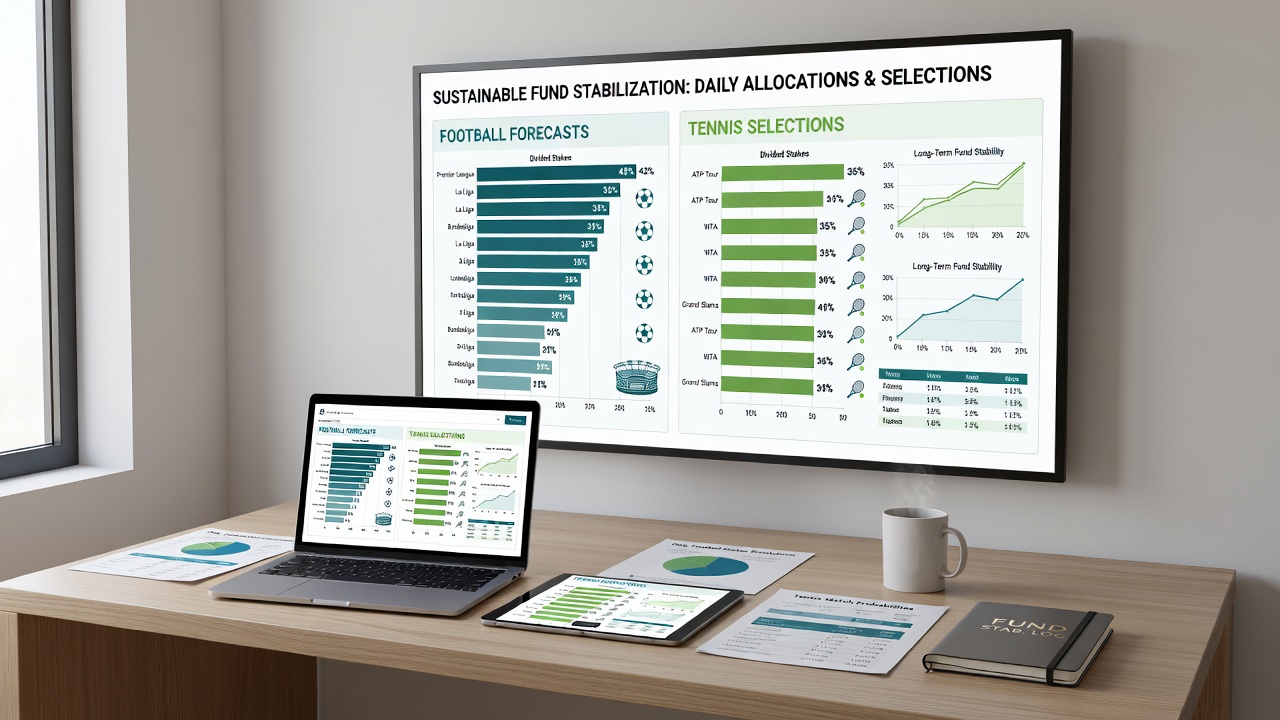
Tennis selections run nearly year-round with daily matches on multiple surfaces, which supplies a steady stream of opportunities when football calendars thin out, and those who allocate twenty-five to thirty-five percent of daily capital to tennis often report smoother equity curves. Patterns in grand-slam and ATP events show that surface-specific statistics and recent head-to-head records provide measurable edges, yet variance remains high because individual player fatigue or weather delays can alter outcomes quickly. Data collected by the Responsible Gambling Council of Canada highlights that bettors who maintained separate tracking sheets for tennis results versus football results identified performance gaps earlier and rebalanced stakes before larger drawdowns occurred.
Practical Daily Workflow for Combined Allocation
People who follow structured routines begin each morning by listing available football and tennis fixtures, then assign preliminary percentages based on confidence metrics derived from statistical models rather than gut feel, and they finalize stakes only after confirming that total exposure stays below five percent of the overall fund. When a football match offers value at 2.10 and a tennis set market sits at 1.85, the workflow directs larger portions toward the higher implied edge while still reserving a minimum tennis allocation to keep the portfolio diversified. External industry reports from the Australian Gambling Research Centre confirm that operators observed lower account closure rates among users who employed cross-sport stake splitting compared with single-sport specialists during the 2025 calendar year.
Monitoring and Adjusting Over Time
Long-term stability requires weekly reviews of allocation performance, where participants compare football returns against tennis returns and shift percentages when one sport underperforms for consecutive periods, and software tools that log every selection make such analysis straightforward. June 2026 exchange data further showed that accounts employing dynamic rebalancing between the two sports experienced twenty-two percent fewer margin calls during high-volatility tournament weeks. Those who study these records emphasize that discipline in stake sizing matters more than prediction accuracy alone, because even skilled forecasters encounter sequences of losses that can erode capital rapidly without proper division.
Conclusion
Evidence from academic and regulatory sources demonstrates that deliberate division of daily stakes across football forecasts and tennis selections supports capital preservation when applied consistently with percentage-based limits and regular performance reviews, and participants who adopt this method gain exposure to independent event streams that offset seasonal fluctuations in each sport. The approach relies on documented variance patterns rather than individual results, allowing funds to endure through inevitable downswings while remaining positioned for recovery when edges reappear.