31 Aug 2026
Cross-League Goal Timing Trends and Their Role in Football Accumulator Construction
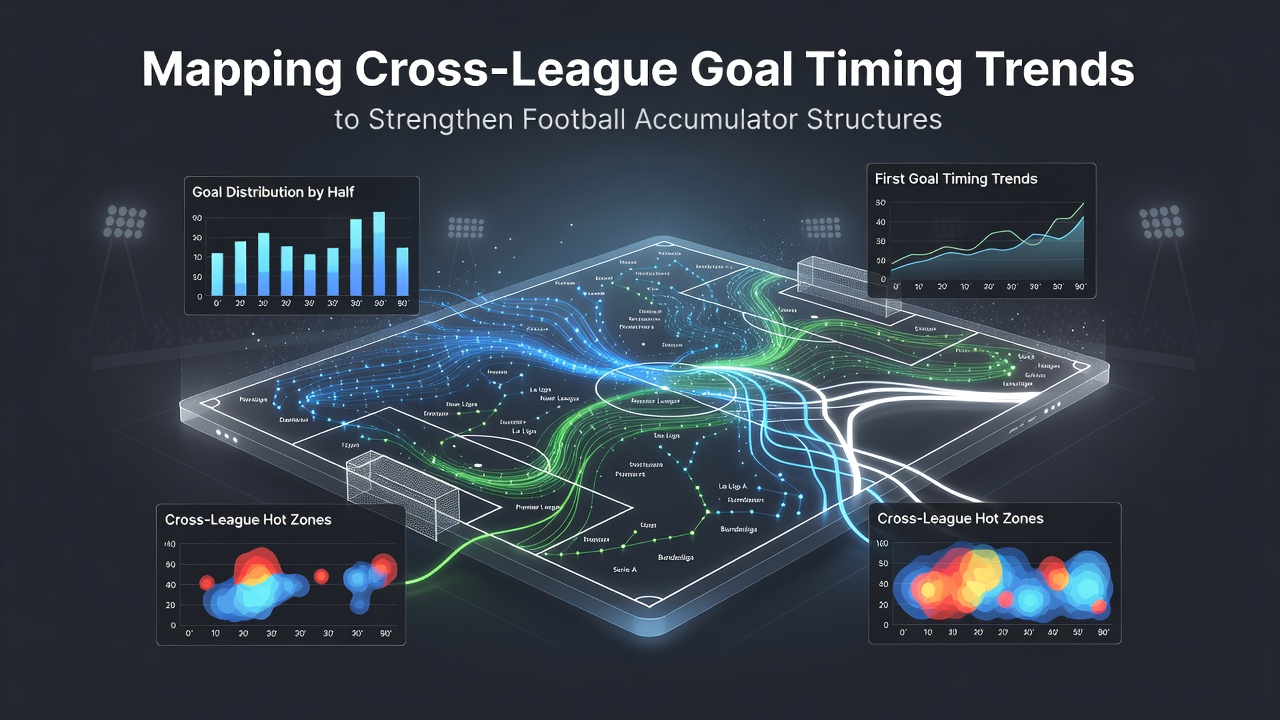
Football accumulators rely on multiple outcomes aligning across matches, and analysts track goal timing trends across leagues to refine those structures. Data from major European competitions shows that goal distribution varies significantly by league, half, and even minute ranges, which creates measurable patterns for multi-leg bets. Observers note that early goals appear more frequently in the Bundesliga than in Serie A, while late surges characterize certain matches in the Premier League and Ligue 1. These differences allow bettors to layer selections with greater precision rather than treating all fixtures identically.
League-Specific Timing Data
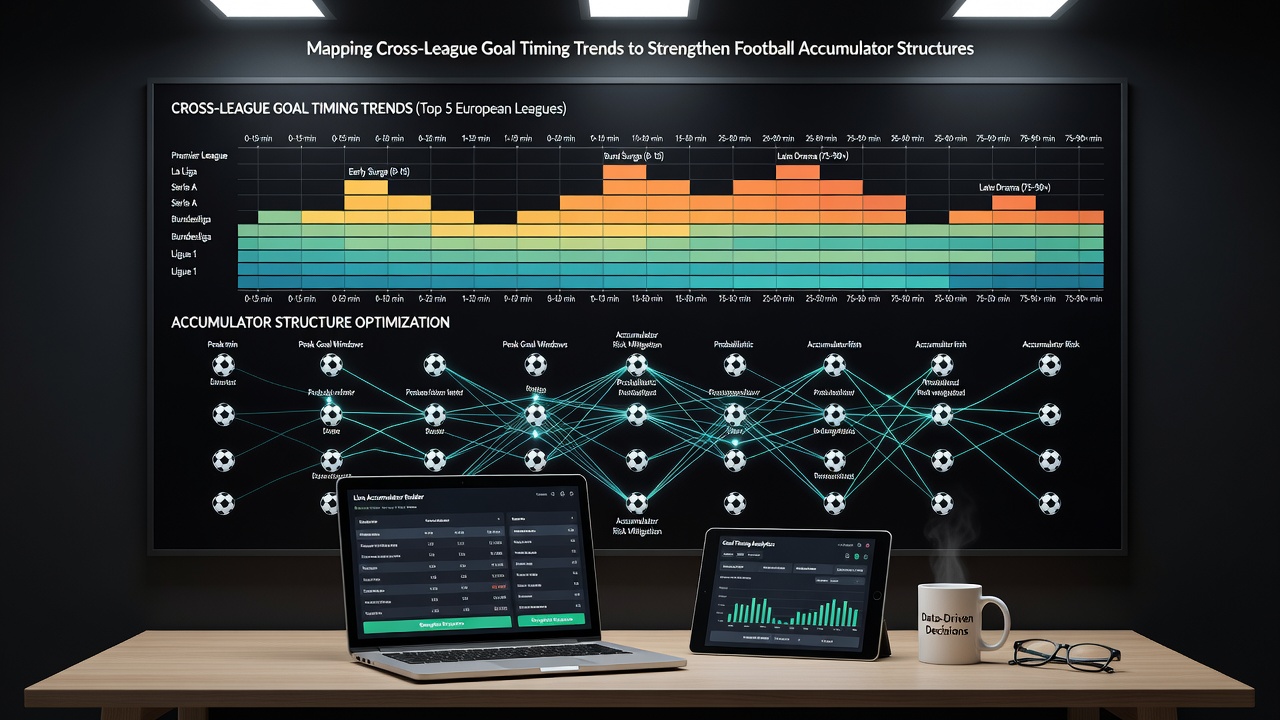
Statistics compiled through the 2025-26 season reveal distinct profiles. In the Bundesliga, roughly 28 percent of goals occur in the opening 25 minutes, whereas Serie A records closer to 19 percent in the same window. La Liga tends to cluster goals between minutes 60 and 75, a pattern that holds across multiple campaigns. When constructing accumulators, these distributions guide whether to include over-2.5 goals selections or to avoid them in leagues that produce slower starts. Analysts cross-reference these figures with home and away splits, because away sides in certain competitions concede later in matches, altering the expected timing window.
Applying Timing Maps to Multi-Leg Bets
Accumulators gain structure when selections account for timing windows rather than raw totals alone. One approach involves pairing a high-scoring Bundesliga side expected to score early with a La Liga fixture that historically sees decisive goals after the hour mark. This combination reduces overlap risk because the matches operate on different rhythms. Researchers have documented that accumulators built around complementary timing profiles show improved consistency across sample sets drawn from August 2025 through July 2026. Data platforms that segment goals by 15-minute intervals provide the granularity needed to test such pairings before placing bets.
Seasonal Shifts Observed in 2026
Matches played from August 2026 onward continue to reflect the same cross-league contrasts, although fixture congestion around international breaks introduces minor deviations. Teams returning from national team duty sometimes delay their first goal until after the 30-minute mark, a shift most noticeable in the English and Spanish top flights. Those who monitor rolling four-week datasets adjust accumulator legs accordingly, swapping in leagues that maintain steadier timing patterns during congested periods. European Club Association reports confirm these micro-adjustments occur annually without altering the broader league signatures.
Tools and Sources for Trend Mapping
Advanced tracking systems supplied by Opta and similar providers deliver the raw minute-by-minute logs required for this work. Opta data supplies granular event records that analysts convert into timing matrices for each competition. University-led studies, including work from the University of Loughborough sports analytics group, have validated that timing-based filters improve accumulator hit rates when applied systematically. Another useful reference comes from the UEFA technical reports, which publish half-by-half goal breakdowns across Champions League and Europa League ties. Combining these external datasets with domestic league archives creates a comprehensive map that covers both top-tier and secondary divisions.
Building Layered Accumulator Structures
Practical application begins with identifying three or four leagues that exhibit non-overlapping goal timing peaks. A typical structure might combine an early-goal Bundesliga leg, a mid-match Serie A selection, and a late-goal Ligue 1 fixture. Each leg targets a different segment of the 90 minutes, so a single match running counter to its historical profile does not collapse the entire accumulator. Observers emphasize that this method does not guarantee results but supplies a framework for organizing selections around measurable league characteristics rather than intuition alone.
Conclusion
Mapping cross-league goal timing trends supplies a factual foundation for strengthening football accumulator structures. By aligning selections with documented minute-range patterns, those constructing multis can account for league-specific rhythms that persist across seasons, including the opening months of the 2026-27 campaign. Continued access to detailed event data from industry and academic sources supports ongoing refinement of these approaches.