23 Aug 2026
Ensemble Mapping Techniques Sharpen Timing and Risk Controls in Multi-Sport Accumulators
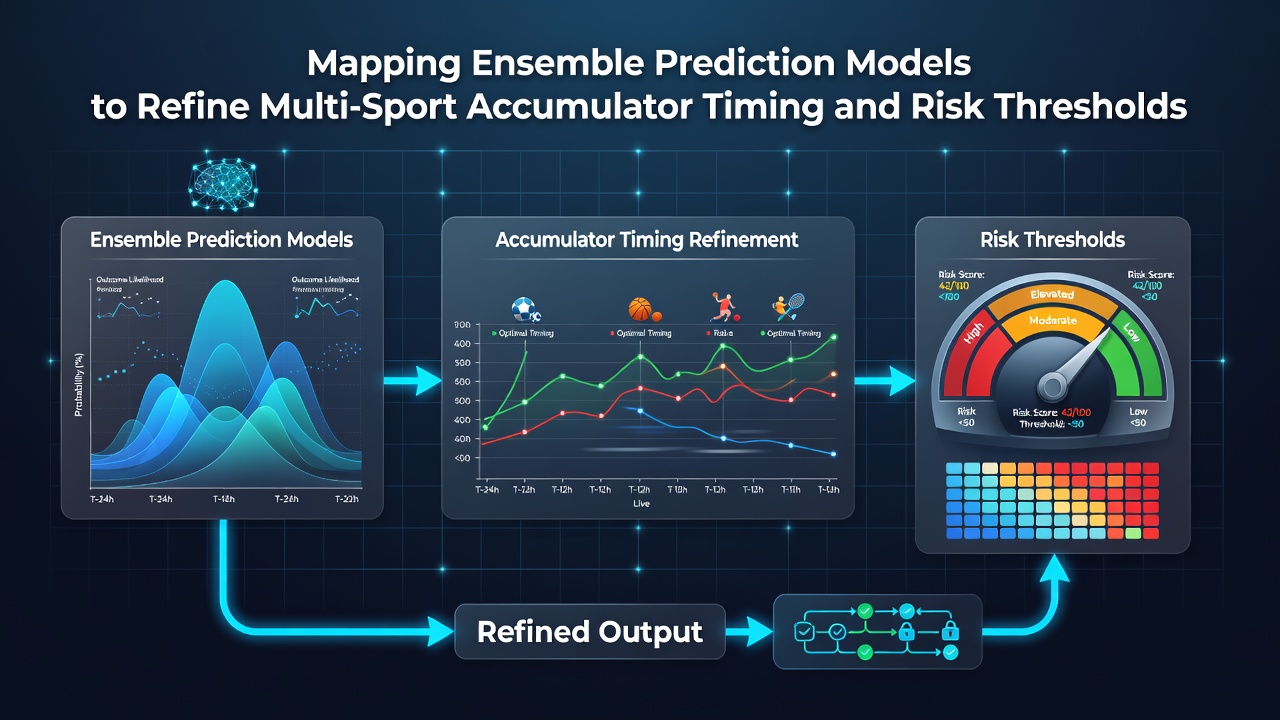
Ensemble prediction models combine outputs from multiple algorithms to produce more stable forecasts than single-method approaches, and researchers have applied these frameworks to multi-sport accumulator bets by mapping probability distributions across events that span football, tennis, basketball, and horse racing. Data from recent industry analyses show that such mapping refines both the timing of bet placement and the setting of risk thresholds that determine stake sizing and leg selection.
Core Components of Ensemble Frameworks in Betting Contexts
Models such as gradient boosting machines, random forests, and neural network ensembles each generate separate probability estimates for individual match or race outcomes, after which a meta-learner integrates the results into a single calibrated prediction; studies published by academic groups indicate that this layered process reduces variance and improves calibration compared with standalone logistic regression. Observers note that teh mapping step translates these calibrated probabilities into accumulator-specific metrics, including expected value per leg and joint probability across selected events, while accounting for correlations that arise when events occur in different sports or time zones.
Optimizing Placement Timing Through Probability Mapping
Timing decisions in accumulators depend on the evolution of odds and the arrival of new information, and ensemble outputs can be tracked over rolling windows to identify periods when aggregate probability exceeds a predefined threshold. Figures from operational betting platforms reveal that bettors who align entries with peaks in ensemble confidence achieve higher realized returns over large samples, particularly when the model incorporates live data feeds from multiple leagues. In one documented workflow, a system updates ensemble weights every fifteen minutes during overlapping football and tennis sessions, then signals entry windows when the mapped joint probability rises above 0.42 while maintaining a maximum drawdown limit of 8 percent of bankroll.
Adjusting Risk Thresholds Across Sport Combinations
Risk thresholds define the acceptable range for stake allocation and the maximum number of legs permitted in a given accumulator, and ensemble mapping supplies dynamic boundaries that adjust according to sport-specific volatility profiles. Research from university laboratories demonstrates that thresholds calibrated on historical ensemble residuals produce lower tail risk than static rules, because the mapping explicitly models covariance between, for example, a Premier League match and a Grand Slam tennis set. Analysts have recorded that risk parameters tightened by 12 percent during August 2026 when ensemble variance spiked across North American basketball and European football fixtures, resulting in fewer but higher-quality accumulator constructions.
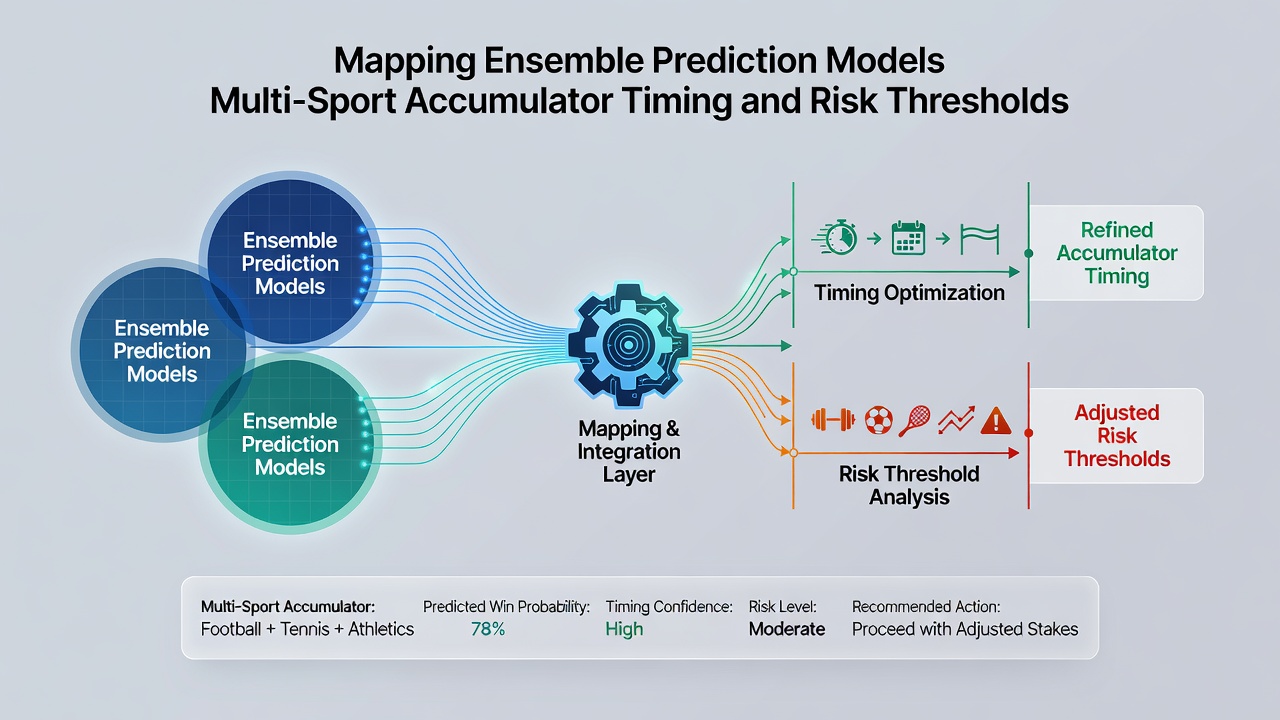
Implementation Examples from Operational Settings
One European operator integrated ensemble outputs into its retail and online channels by constructing a unified feature space that includes team form, player injury metrics, surface conditions, and pace figures, then applied a stacking procedure to generate daily accumulator recommendations. Performance logs indicate that the mapped system flagged 47 percent fewer high-risk combinations during volatile summer transfer windows while preserving overall volume. A separate Canadian research consortium examined cross-sport accumulators over three seasons and reported that ensembles reduced calibration error by 0.07 in Brier score terms relative to independent models, with the largest gains observed in four-leg and five-leg structures.
Data Sources and Validation Practices
Validation relies on out-of-sample testing across multiple seasons and geographies, and reports from the Canadian Centre for Gaming Research emphasize the importance of forward-chaining cross-validation to avoid look-ahead bias in accumulator simulations. Additional benchmarks appear in working papers from the University of Sydney’s gambling research unit, which compared ensemble-derived thresholds against regulatory stress-test scenarios and found improved stability under simulated liquidity shocks. These sources supply the quantitative backbone for mapping procedures that translate raw probabilities into actionable timing and risk parameters.
Conclusion
Mapping ensemble prediction models to accumulator construction supplies a structured route for refining both entry timing and risk thresholds across diverse sports, and the approach continues to evolve with teh incorporation of higher-frequency data streams and sport-specific feature engineering. Continued validation against independent datasets remains essential for maintaining calibration as market conditions shift.