14 Jun 2026
Player Head-to-Head Metrics: Refining Football Accumulator Selections
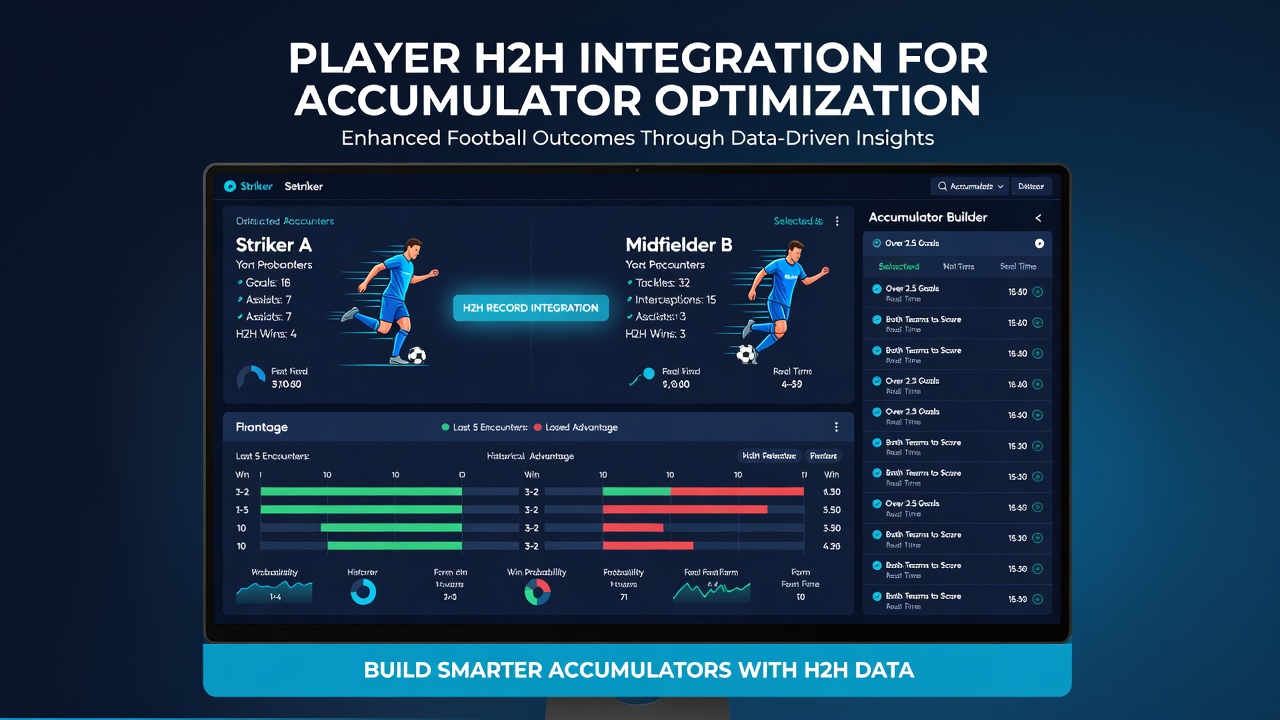
Football accumulators gain precision when bettors incorporate detailed player head-to-head records into their selection process, and data from multiple European leagues demonstrates how these historical matchups influence outcomes in goals scored, assists recorded, and disciplinary actions taken. Observers note that teams often schedule fixtures where individual player performances against specific opponents follow repeatable patterns, which creates opportunities to layer multiple selections with higher consistency across multi-leg bets.
Understanding Head-to-Head Data Sources
Comprehensive databases compile player versus player statistics across domestic leagues and continental competitions, covering metrics such as shots on target, key passes, and tackles completed in direct confrontations. Researchers at institutions like the University of Loughborough have examined how these datasets reveal tendencies that standard team form overlooks, particularly when midfielders face familiar defensive setups or forwards encounter goalkeepers they have tested repeatedly. As of June 2026, several analytics platforms expanded their coverage to include under-23 matches, allowing constructors to access deeper historical layers for emerging talents entering senior accumulators.
Applying Records to Specific Bet Types
Accumulator builders focus on player props like anytime goalscorer or card markets by cross-referencing past encounters, and figures from Opta reveal that certain strikers maintain conversion rates above their seasonal average when matched against particular centre-backs. This approach extends to over/under selections on corners and shots, where wingers with established success against given full-backs contribute to higher totals. Those who study these patterns often discover that combining three or four such targeted legs produces accumulators with improved strike rates compared to selections based solely on recent team results.
Building Layered Accumulators with Multiple Variables
Construction begins with identifying core fixtures where head-to-head data aligns across several players, then adds supporting legs from unrelated matches that share similar statistical profiles. A case from the 2025-26 Premier League season showed how one researcher who tracked full-back duels identified consistent overlaps in crossing accuracy, which informed simultaneous selections in both goal and assist markets. This method connects related player tendencies without forcing unrelated bets into the same slip, and the result appears in accumulators that reach later stages more frequently. What's interesting is that defensive midfielders with strong records against creative number tens can anchor legs focused on low card counts, balancing risk across the ticket.

Regional Variations and League-Specific Trends
Italian Serie A data shows tighter defensive structures that amplify the value of player-specific clean sheet records, while Bundesliga matches produce higher shot volumes where forward versus goalkeeper histories carry more weight. Australian sports analytics groups have published reports comparing these patterns across continents, highlighting how travel and fixture congestion alter head-to-head relevance in certain weeks. Constructors adjust accumulator sizes accordingly, shortening tickets during congested periods when historical matchups become less predictive due to squad rotation.
Integration with Live Data Feeds
Real-time updates allow bettors to monitor in-match developments against pre-loaded head-to-head baselines, and several platforms now embed these comparisons directly into accumulator builders. Evidence from industry reports indicates that users who reference these tools during construction achieve steadier progression through multi-leg sequences, particularly when early goals shift the value of remaining player props. This integration turns static records into dynamic filters that respond to unfolding events without requiring manual recalculation of each leg.
Conclusion
Player head-to-head records supply a factual foundation that refines accumulator construction across football markets, and ongoing expansions in data availability continue to support more granular selections. Those who maintain updated databases and cross-reference league-specific trends position their multi-leg bets on measurable patterns rather than broad assumptions, which produces consistent structural improvements in selection methodology.