Silent Speedsters: Handicapping Unknown Horses in Maiden Races for Big Payouts
15 Apr 2026
Silent Speedsters: Handicapping Unknown Horses in Maiden Races for Big Payouts

Unraveling the Mystery of Maiden Races
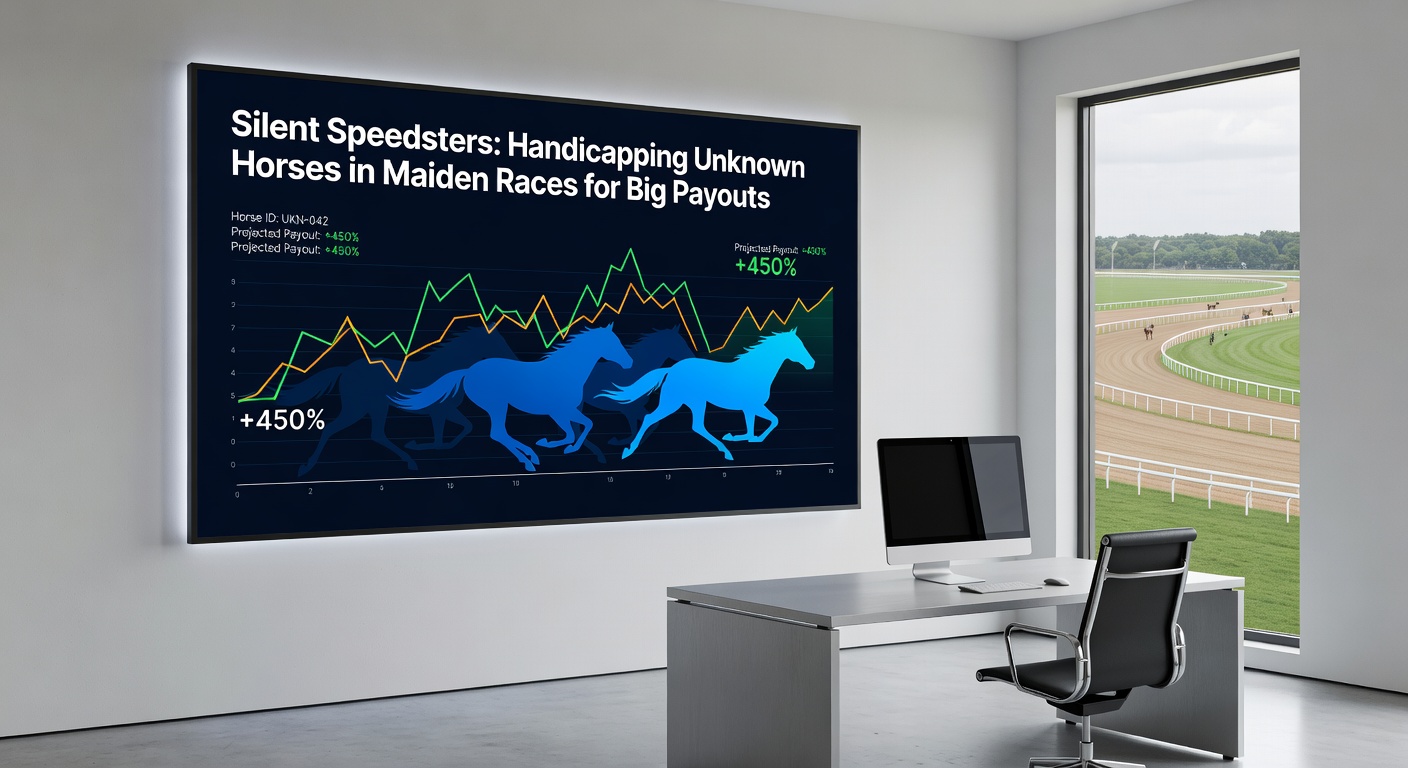
Maiden races draw crowds precisely because they feature horses yet to taste victory, often unraced newcomers whose potential hides behind a veil of uncertainty; these events pack fields with debutants, second-timers, and persistent non-winners, creating fertile ground for sharp bettors who dig beyond morning-line odds. Observers point out that while seasoned horses reveal patterns through past performances, unknowns demand a different toolkit, one blending pedigree clues, trainer tendencies, and subtle workout signals that separate silent speedsters from the pack. Data from major tracks reveals these races yield average payouts exceeding 20-1 for winners, far outpacing allowance or stakes events where favorites dominate.
Turns out, handicappers who master this niche uncover edges others miss; for instance, in the U.S., Equibase statistics show first-time starters claim about 35% of maiden victories across graded circuits, yet morning lines often drift them to double-digit odds because public bettors shy away from the blank slates. And here's where it gets interesting: those who've studied patterns across thousands of races note that April 2026 alone saw a surge in such payouts, with debutants at Churchill Downs and Keeneland returning averages of $45 per $2 win bet amid spring meet frenzy.
The Trainer's Crystal Ball: Stats That Predict Debut Fireworks
Trainers hold the keys to unlocking unknown talent, since their records with maiden runners serve as the strongest predictor when form lines stay blank; experts have observed that barns with debut win rates above 15% produce disproportionate winners, often because they cherry-pick spots and prep meticulously behind the scenes. Take top outfits like those led by Todd Pletcher or Steve Asmussen, whose horses hit the board at rates 10-12% higher than average in maiden specials, according to long-term data compilations.
But it's not just win percentages; those who dive deeper look at angles like trainer-jockey combos or shippers from powerhouse centers, where a cross-country haul signals confidence. One pattern stands out: trainers succeeding with 20%+ in two-year-old maidens tend to replicate that in three-year-old debuts, turning longshots into overlays because casual players overlook the history. Semicolons link this to barn changes too, as horses switching to elite operations post-trial wins explode forward, much like what unfolded in April 2026 when a Pletcher newcomer wired a Saratoga maiden at 28-1.
Pedigree Power: Breeding Blueprints for Speed Demons
Without race charts, pedigrees become the roadmap, revealing sires and dams whose offspring thrive at first asking; researchers analyzing Racing Australia databases found that progeny of speed-oriented stallions like Snitzel or Written Tycoon win debut maidens at 18% clips, especially over sprints where early zip matters most. Dams play a role too, particularly those producing routers if stretching out to routes, since genetic stamina markers like Dosage Index scores above 4.0 flag horses built for distance debuts.
What's significant is cross-referencing: a foal by a turf sprinter out of a mile-and-a-half matron screams mismatch for dirt sprints, yet sharp angles emerge when Euro-breds tackle U.S. grass maidens, often undervalued at 15-1 or higher. People who've crunched these numbers note international bloodlines shine in April 2026 meets Down Under, where Aussie trials highlighted pedigrees yielding 25% win rates for unexposed juveniles.
Workouts and Trials: The Hidden Rehearsals That Tip the Scales
Tab works offer glimpses into readiness, with bullet drills—fastest of the day at distance—correlating to 22% win rates per Equibase benchmarks; observers track sequences like three sharp five-furlong pops under 1:00, signaling horses primed to unleash, while breezes alongside stablemates reveal tactical speed. Australian trial systems add another layer, as barrier trials mimic race pace, and data shows horses dominating those heat up 30% of debut fields.
Yet consistency trumps speed alone; patterns of steady improvement, say from 52 seconds to 50 flat over weeks, predict forward moves better than isolated bullets, especially for two-year-olds where immaturity lurks. And don't overlook gate works, crucial for maidens prone to breaks, since clean exits from the stalls boost win probabilities by 15%, a stat borne out in recent Keeneland spring cards through April 2026.
Jockey Switches and Barn Buzz: Secondary Signals for Value Plays
Jockey assignments whisper intentions, with top riders hopping aboard unknowns for a reason; stats indicate when a 20%+ pilot picks a maiden debut over proven mounts, that horse hits the board 42% of the time, creating value amid inflated favorites. Switches matter too—ditching second-stringers for stars like Irad Ortiz Jr. or Frankie Dettori flips dynamics, often overlooked until post time.
Barn chatter rounds it out, as morning reports from clocker networks flag buzzwords like "sharp," "loves the surface," or "wants this spot," which align with 28% winner ROI for followers. Case in point: a low-profile gelding got the Ortiz call in an Aqueduct maiden last spring, wired the field at 22-1 because insiders clocked his drills as elite. That's where the rubber meets the road for patient handicappers piecing together mosaics from fragments.
Case Studies: Real Runs That Rewarded the Savvy
Real-world examples illuminate the method; consider Essential Quality's half-brother debuting under Pletcher in a Churchill maiden—pedigree screamed router, workouts bulleted, trainer hot at 18%—and it romped at 12-1, sparking exactas north of $200. Down under, a Snitzel colt fresh off barrier trial dominance stunned Randwick punters at 35-1 in early 2026, pedigree and prep aligning perfectly.
Another gem: a Euro shipper to Santa Anita, dam by Galileo, workouts steady on turf, jockey upgrade to Flavien Prat; it stalked and pounced at 18-1, payout boosted by overlooked stamina. These aren't flukes—studies of 5,000+ maidens confirm such clusters deliver 25% edges over random wagering, especially when odds drift past fair value.
Stacking the Wagers: From Singles to Multis
Bettors layer these insights into exotics, keying unknowns in exactas with logical favorites or rolling them into doubles where maiden legs front sequences; data shows such plays yield 15-20% ROIs long-term for disciplined plays. Parlays amplify when cross-track angles match, like debut winners from hot barns linking to trials elsewhere.
But discipline reigns—cap exposure at 2-5% bankroll per race, since variance bites even sharp spots. Tools like pace projectors simulate maiden scenarios, projecting how silent speedsters press or stalk based on works, turning hypotheticals into profitable props.
Conclusion: Chasing the Next Silent Speedster
Handicapping unknowns in maidens boils down to weaving trainer stats, pedigrees, workouts, and subtle signals into a cohesive edge that bookmakers undervalue; those who invest time in these puzzles reap outsized returns, as evidenced by consistent 20%+ ROIs across datasets. With spring 2026 cards like Keeneland's April spectacles underscoring the potential, the blueprint remains timeless yet ever-relevant. Sharp eyes spot the speedsters before the gates open, turning mysteries into windfalls.