7 Aug 2026
The Interplay of Form Cycles: Aligning Bankroll Controls with Shifting Odds in Football and Tennis Accumulators

Form cycles in football and tennis create measurable patterns that influence accumulator outcomes, and observers note how these cycles interact with live odds adjustments across major leagues and tournaments. Data from sports analytics platforms shows that teams and players experience performance peaks and troughs lasting three to six weeks on average, during which betting markets recalibrate probabilities accordingly. Those who track historical results find that early detection of these shifts allows for precise timing when building multi-leg bets, particularly in accumulators that combine several matches or sets.
Tracking Form Indicators Across Sports
Football accumulators often rely on team metrics such as recent goal differentials and possession percentages, whereas tennis accumulators focus on serve percentages and break-point conversion rates over consecutive tournaments. Researchers at institutions like the University of Sydney have documented how these indicators predict outcome probabilities with greater accuracy than raw win-loss records alone. In August 2026, pre-season football data and hard-court swing results in tennis provide fresh datasets that reveal cycle transitions before bookmakers fully integrate them into pricing models.
People who monitor these metrics observe that odds on favorites contract rapidly once form signals strengthen, while underdog lines expand during downturns. This dynamic creates windows where accumulator builders can adjust stake sizes before markets stabilize. Studies indicate that combining multiple form signals across both sports reduces variance in multi-leg selections compared to single-sport approaches.
Bankroll Allocation Strategies During Odds Shifts
Bankroll controls gain importance when odds move in response to form updates, and allocation models such as fractional Kelly criteria help maintain exposure levels. Figures from industry reports reveal that bettors who resize stakes proportionally to updated probabilities preserve capital over extended sequences of accumulators. In practice, a 2 percent bankroll limit per accumulator leg adjusts downward when form cycles indicate higher uncertainty, such as during player fatigue periods in tennis or fixture congestion in football.
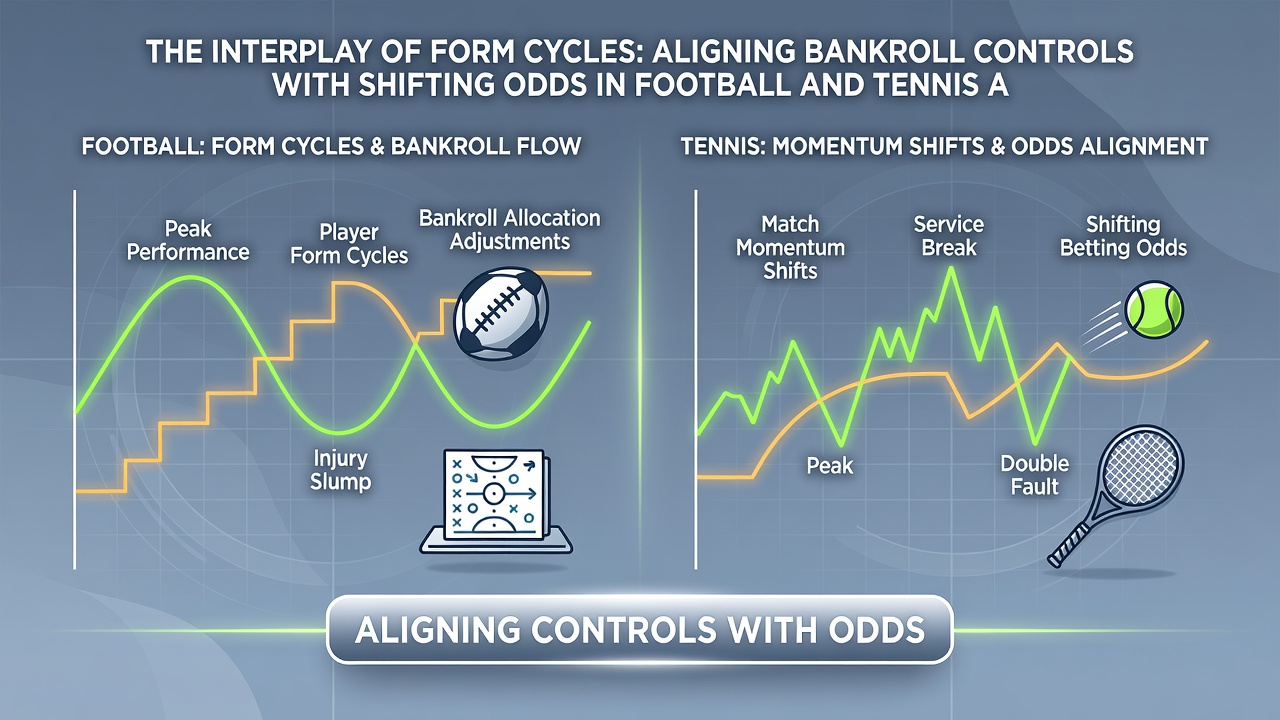
One study revealed that gradual stake reduction during detected form reversals protects against sequences of losses that commonly follow overcommitment. Observers note that automated tracking tools now integrate real-time odds feeds with historical cycle data, enabling faster recalibration than manual methods. Those who've examined long-term records see that disciplined resizing correlates with steadier returns across both football and tennis markets.
Case Examples of Cycle Alignment
Take one accumulator that combined English Premier League matches with ATP hard-court events during a documented form upswing for several squads and players. The selections benefited from pre-adjustment odds that had not yet reflected improved defensive metrics and elevated first-serve points won. Another instance involved European football sides entering a recovery phase after international breaks, where accumulator builders scaled exposure based on possession trend reversals rather than recent results alone.
What's interesting is how these examples illustrate the value of cross-sport timing. A report from the American Gaming Association highlights that multi-sport bettors who synchronize form monitoring achieve lower drawdown rates than those focused on single disciplines. Data shows correlation between accurate cycle identification and improved accumulator completion rates over multiple seasons.
Integrating External Data Sources
External feeds from performance databases supplement traditional statistics, and bettors incorporate variables such as travel schedules and surface transitions that affect tennis cycles more acutely than football ones. According to findings published by the Canadian Centre for Gaming Research, incorporating travel-related fatigue metrics improved predictive models for tennis accumulators by measurable margins. Football applications similarly draw on fixture density reports issued by league analysts to anticipate mid-cycle dips.
Adjustments remain modest because markets incorporate public data quickly, yet residual edges persist for those who combine proprietary tracking with official sources. The reality is that August 2026 schedules introduce new variables, including expanded international windows and altered tournament calendars, that create fresh opportunities for cycle-based alignment.
Conclusion
Form cycle analysis paired with responsive bankroll controls offers structured approaches to accumulator construction in football and tennis. Evidence from multiple research bodies demonstrates that timely recognition of performance shifts, combined with proportional stake management, supports sustained participation across varying market conditions. Observers continue to examine how evolving data tools refine these processes in the seasons ahead.