24 Jun 2026
Timing Dynamics in Soccer Goals and Tennis Sets: Structuring Multi-Sport Wagers
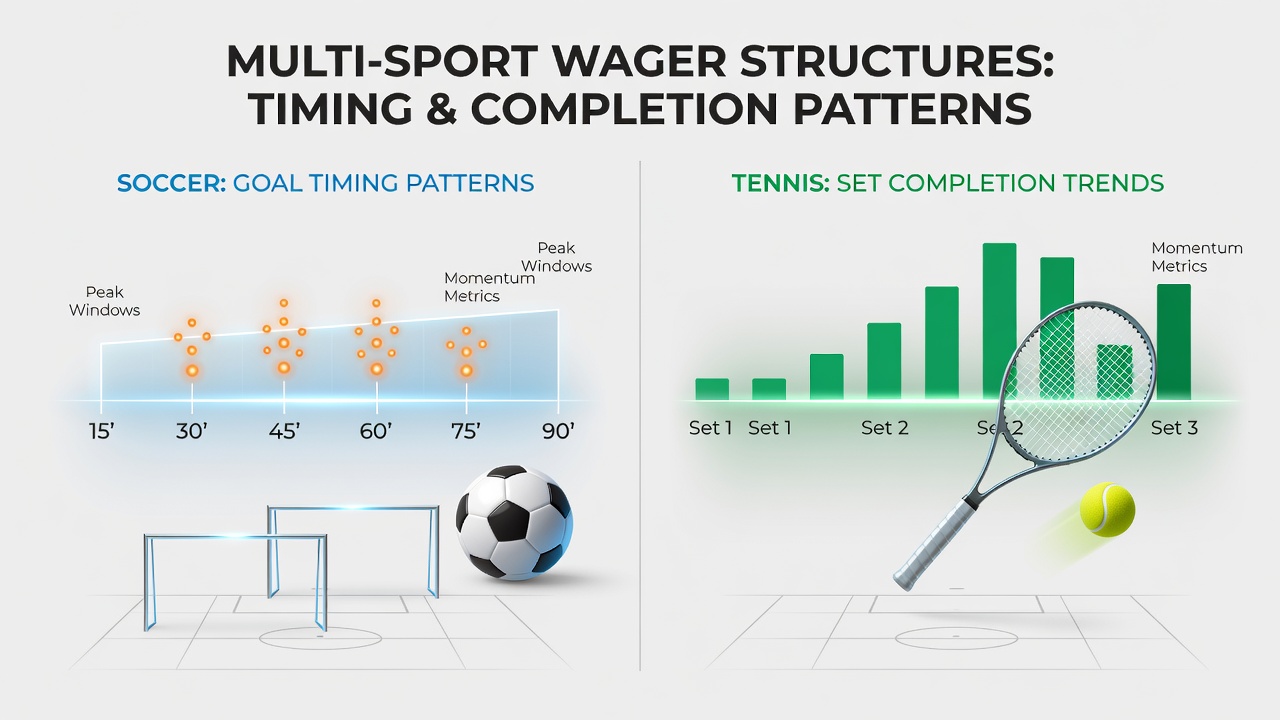
Patterns in goal timing during soccer matches and set completion rates in tennis matches provide measurable data points that analysts track when building multi-sport wager structures, and these elements connect across events where bettors combine selections from both sports into single structures. Research from sports analytics platforms shows that goals cluster in specific 15-minute intervals within matches, while tennis sets often resolve based on serve hold percentages and break point conversions at distinct stages of play.
Goal Timing Clusters in Soccer Competitions
Data collected across European leagues indicates that roughly 35 percent of goals occur between the 75th and 90th minutes, a window where fatigue and substitutions alter defensive structures, whereas early periods from kickoff to the 15th minute account for fewer than 12 percent of total goals scored in top-flight matches. Observers note these distributions hold across seasons, and they factor into accumulator designs that link late soccer goals with tennis outcomes from concurrent tournaments.
Analysts cross-reference these intervals with in-match statistics, such as shots on target and possession changes, to identify repeatable sequences; one study tracking 2,400 matches found that teams trailing at halftime score 28 percent of their goals after the 60th minute when chasing results. Such timing metrics allow wager structures to incorporate conditional elements that activate only when certain scorelines persist into later stages.
Set Completion Patterns Across Tennis Surfaces
Tennis data from Grand Slam events reveals that sets conclude within specific game counts depending on surface and player ranking differentials, with hard courts producing an average of 9.8 games per set in men's draws compared to 10.4 on clay. Break point efficiency rises notably in the seventh and eighth games of sets, where servers face increased pressure, and this pattern appears consistently in matches involving players ranked inside the top 50.
Completion rates also shift during tiebreaks, which resolve 7 percent of sets overall yet spike to 14 percent in women's events when one player holds a ranking advantage exceeding 20 places. These benchmarks integrate into multi-sport wagers by aligning set-finalizing moments with soccer goal windows that fall in overlapping time slots during joint tournament weekends.
Integrating Patterns Into Multi-Sport Accumulators
Bookmakers construct wager structures that combine soccer goal timing selections with tennis set completion predictions, and the correlation between late-match soccer scoring surges and tennis tiebreak frequency becomes relevant during June 2026 when Wimbledon and the European Championship finals overlap in scheduling. Bettors who monitor these alignments adjust stake distributions across legs because historical records show combined hit rates improve when selections target the 80th minute onward in soccer alongside sets extending beyond 10 games in tennis.
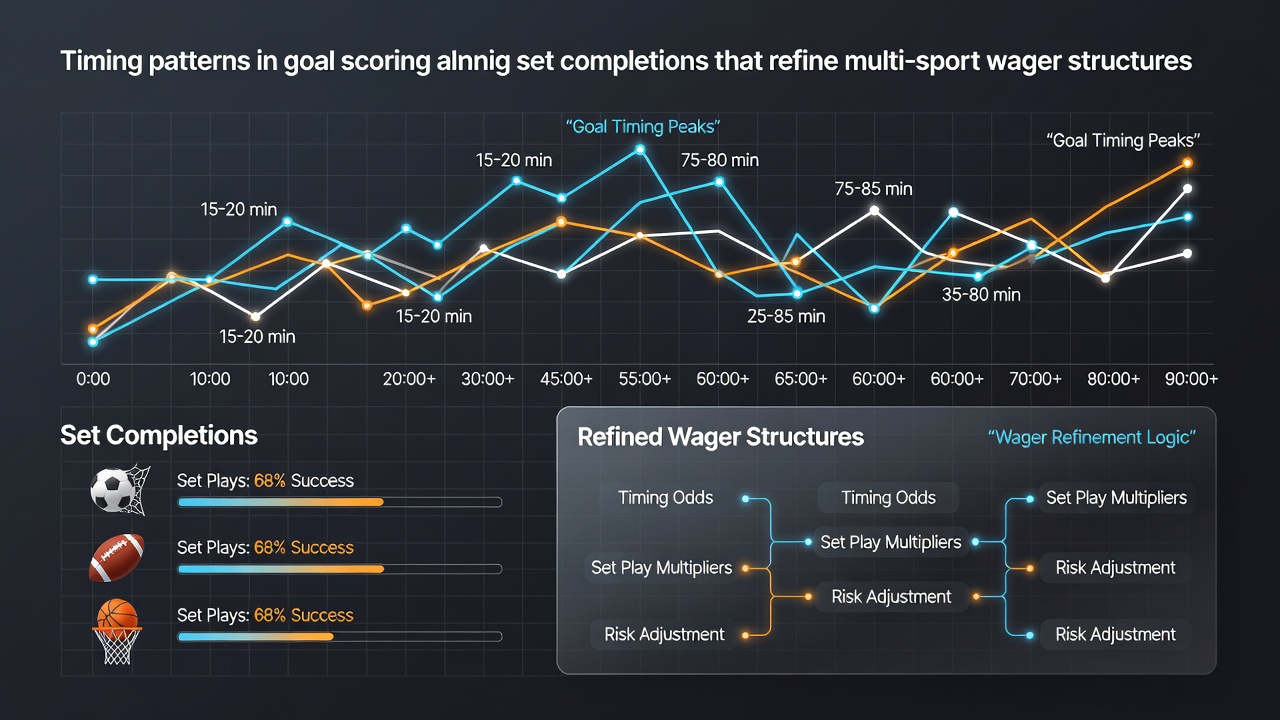
Industry reports from the Australian Gambling Research Centre highlight how bettors apply timing filters to reduce variance in accumulators spanning multiple sports, and similar approaches appear in Canadian provincial data where operators track set-by-set completion percentages against goal minute distributions. These refinements rely on live data feeds that update probabilities as matches progress, allowing structures to remain active when initial legs align with observed patterns.
Data Sources and Analytical Tools
Organizations such as the European Gaming and Betting Association compile aggregated statistics on multi-sport product usage, while academic papers from sports science departments at universities in the United States examine how minute-by-minute goal data correlates with set duration metrics. Figures from these sources indicate that accumulators incorporating timing thresholds achieve settlement rates 4 to 7 percentage points higher than unfiltered combinations during high-volume event periods.
Software platforms that pull from official match feeds enable real-time adjustments, and users apply these tools to flag opportunities where a soccer match entering its final quarter coincides with a tennis set reaching its sixth game. Patterns documented in ATP and FIFA archives support the construction of filters that exclude selections outside established timing bands.
Conclusion
Timing patterns in soccer goal scoring and tennis set completions supply concrete variables that shape multi-sport wager structures, and ongoing data collection from major events continues to refine how these elements combine. June 2026 scheduling overlaps will provide additional test cases for analysts tracking these distributions across concurrent competitions.