19 Aug 2026
Tracing Value Through Preview Details to Strengthen Accumulator Construction Across Football and Tennis Markets
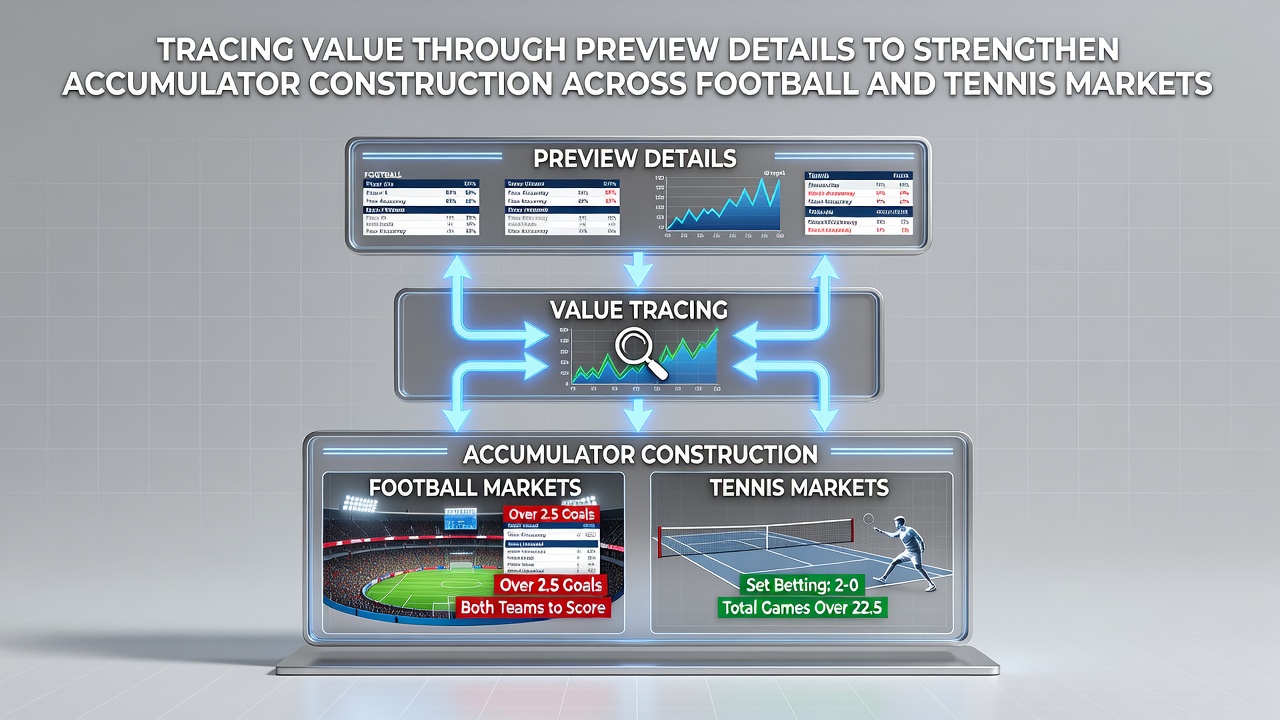
Accumulator construction in football and tennis relies on careful examination of preview details that reveal patterns in performance data, and those details often determine whether multiple selections hold together across several matches or sets. Analysts track team news releases, injury reports, and historical matchups in football while monitoring surface preferences, recent form streaks, and head-to-head records in tennis, because these elements feed directly into probability calculations that shape accumulator selections.
Preview Data Sources in Football Markets
Football preview materials published by leagues and clubs provide line-up confirmations, training ground updates, and tactical notes that observers compile weeks before matchdays, and these updates allow bettors to adjust accumulator legs when key players are ruled out or when formations shift. Researchers at sports analytics centers have documented how early access to such information correlates with improved selection accuracy, particularly in markets that cover both team totals and player props. Data from major European competitions shows that sides with stable midweek squads tend to maintain consistent scoring rates, whereas last-minute changes frequently alter expected goal outputs by measurable margins.
Head-to-head archives further refine accumulator structures because repeated encounters between the same clubs expose recurring scoreline tendencies and defensive vulnerabilities that preview writers highlight before each fixture. When combined with current league standings and home advantage metrics, these historical layers create multi-leg bets that reflect actual performance trends rather than surface-level narratives. August 2026 fixtures already feature several high-profile clashes where clubs release detailed preview packs that include expected lineup graphics and set-piece statistics, giving constructors additional variables to incorporate into their selections.
Tennis Preview Elements and Accumulator Layers
Tennis markets operate on shorter timeframes yet still depend on granular preview information such as court surface reports, recent match durations, and physical condition updates released by tournament organizers. Players who excel on specific surfaces show measurable advantages in service hold percentages, and these figures appear in official preview documents that help shape accumulator combinations across multiple tournaments. Observers note that fatigue indicators from previous rounds often appear in post-match comments and medical updates, which in turn influence the viability of extending an accumulator into later stages of the same event.

Grand Slam preview guides published by governing bodies regularly include breakdown statistics on break-point conversion and tie-break success rates, and these numbers allow constructors to identify value in set-based or match-winner selections that span several days. When preview details highlight a player returning from injury or adapting to a new surface, accumulator builders frequently reduce exposure on that leg or substitute an alternative match with stronger supporting data. Studies from academic sports science departments indicate that such adjustments based on timely preview information produce more resilient multi-leg structures over extended tournament schedules.
Integrating Cross-Sport Preview Insights
Although football and tennis differ in match length and scoring systems, both benefit from systematic comparison of preview elements that include motivation factors, travel schedules, and weather forecasts. Constructors who maintain separate tracking sheets for each sport often cross-reference similar variables such as rest days between matches and historical performance under comparable conditions. Industry reports from organizations like the European Sports Betting Association demonstrate that unified preview frameworks improve overall accumulator stability when applied across seasonal calendars that feature overlapping football and tennis events.
Preview platforms now incorporate machine-readable data feeds that pull directly from official sources, enabling automated alerts when line-ups or player statuses change, and these tools have become standard for serious accumulator planners. In August 2026, several major tennis events coincide with the opening weeks of domestic football leagues, creating simultaneous opportunities where preview details from both sports can be monitored within single analytical dashboards. Government statistical agencies in Australia and Canada have published comparative studies on how preview-driven betting models perform across different sports, revealing consistent patterns in how early information reduces variance in multi-leg outcomes.
Conclusion
Preview details serve as foundational inputs for accumulator construction in both football and tennis because they supply verifiable performance indicators that guide leg selection and stake allocation. When these details are traced methodically through official reports, historical databases, and real-time updates, the resulting accumulators reflect measurable trends rather than speculation. Continued development of preview data systems across regions supports more precise integration of football and tennis markets, particularly during periods such as August 2026 when multiple competitions run concurrently.